 admin
admin
Did you know that over 77% of employees have experienced burnout at their current job?
John, a senior manager at a fast-growing start-up, shared his journey with us during one of our burnout awareness trainings. His story is one that many of us can relate to.
At first, John was on fire. He had just been promoted, and the thrill of new responsibilities kept him energized. He worked long hours, skipping breaks and staying late into the evening. His drive to succeed was fuelled by a passion for his job, and he took pride in being known as the “go-to guy” in the office.
But slowly, cracks began to form.
John started feeling more exhausted than usual. Tasks that were once easy became overwhelming, and his usual enthusiasm was replaced by frustration. He started missing deadlines, something that had never happened before. His colleagues noticed he was more irritable, and his family began to feel the strain of his long hours and stressed demeanour at home.
One Monday morning, John couldn’t get out of bed. The weight of work was too much to bear. He felt empty, drained, and completely disconnected from the job he once loved. When his wife asked him what was wrong, he simply said, “I don’t know where to start.”
John had reached burnout—his body and mind had been sending him signals for months, but he had pushed through, ignoring them until it was too late.
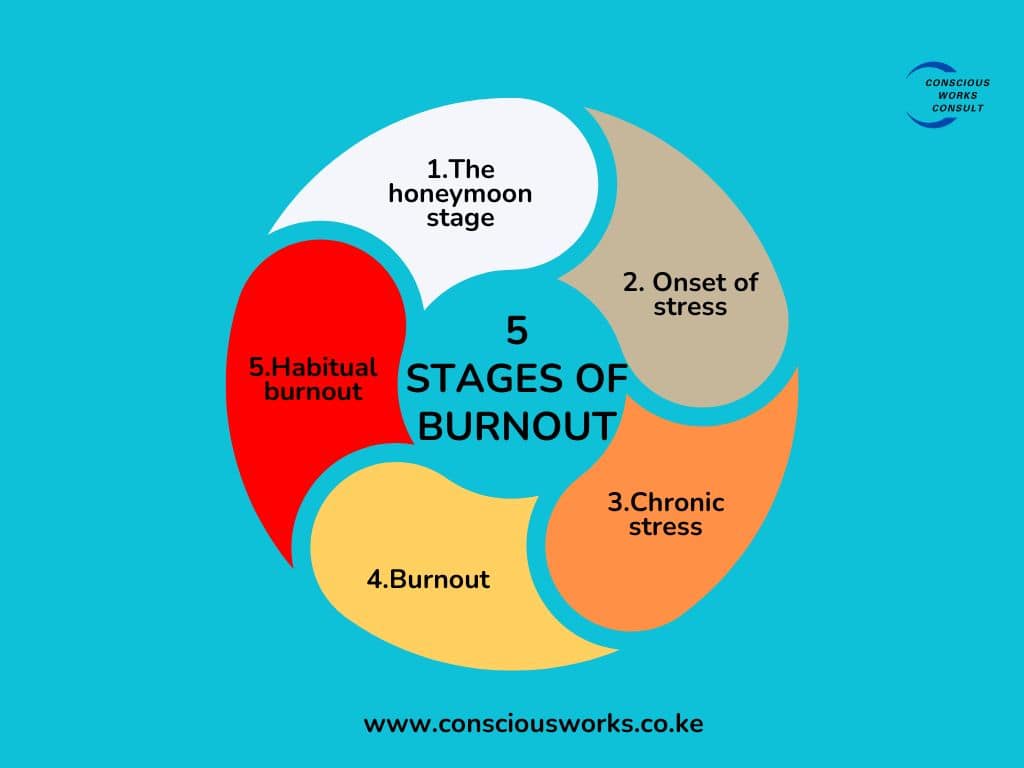
Let’s break down John’s experience into the stages of burnout:
1️⃣ The Honeymoon Phase:
John’s initial enthusiasm and high energy as he took on new responsibilities masked the early signs of stress.
2️⃣ Onset of Stress:
He began to feel the weight of his workload, noticing subtle signs like increased frustration and difficulty sleeping, but he brushed them off, thinking it was just a “busy period.”
3️⃣ Chronic Stress:
As time went on, John’s stress became constant. He was irritable, missed deadlines, and started doubting his abilities. His energy dipped, and he found it hard to focus.
4️⃣ Burnout:
The point where John physically and emotionally shut down. His body and mind couldn’t keep up with the demands anymore. He lost motivation, and even small tasks felt impossible.
5️⃣ Habitual Burnout:
Without intervention, burnout became John’s everyday reality. He withdrew from social connections and found no joy in his work, leaving him stuck in a cycle of exhaustion and stress.
John’s story is a powerful reminder that burnout doesn’t happen overnight—it’s a slow progression, often unnoticed until it’s too late. However, with awareness and the right support, we can catch burnout early and prevent it from taking hold.
❓ How many of us or our teams might be walking in John’s shoes right now? It’s time to check in, both with ourselves and our colleagues.
BURNOUT UNMASKED: ‘The stages we often miss’