Skip to content (Press Enter)
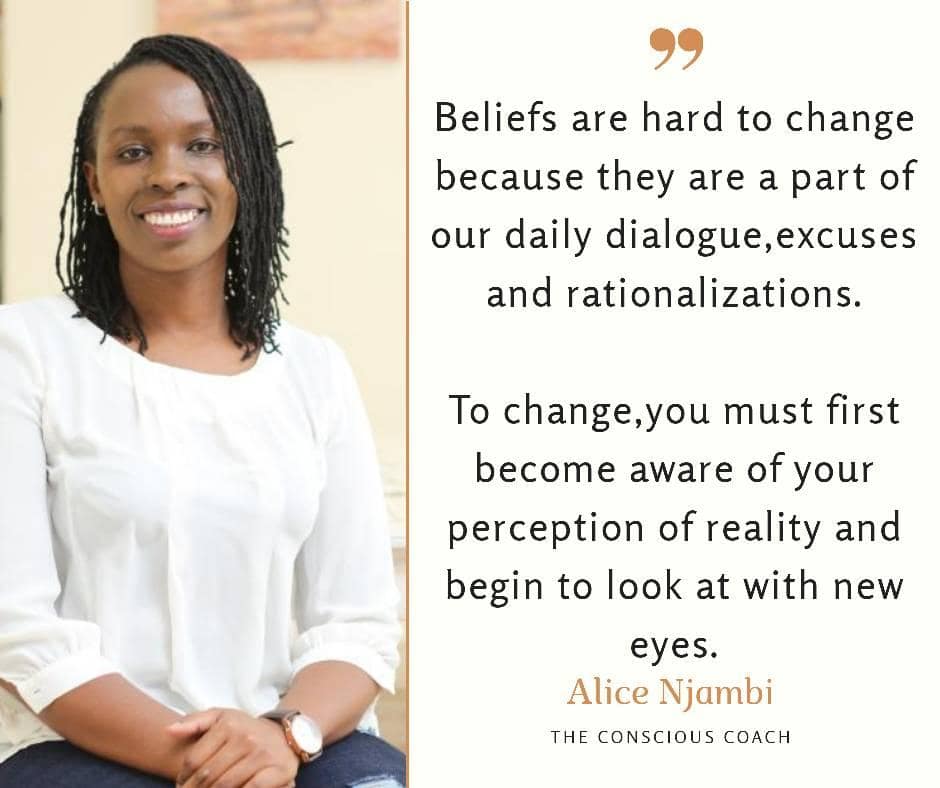
Beliefs are mental attitudes or convictions that people hold to be true about the world, themselves, others, or specific situations. They are deeply ingrained in an individual’s psyche and serve as the foundation for their perceptions, interpretations, and actions. Beliefs can encompass a wide range of domains, including religious, cultural, political, moral, and personal beliefs.
Beliefs often arise from a combination of personal experiences, cultural influences, socialization, education, and exposure to various sources of information. They shape how individuals make sense of their surroundings, guide their behaviour, and inform their decision-making processes.
Beliefs are hard to change because they are engrained in us and stored in our subconscious minds. Programming in our subconscious minds takes place between ages 0-7 and from there the conscious mind takes over. 90% of our adults lives is based on our subconscious. This basically means we are living out other people’s values, beliefs, ideas and ideals.
Beliefs are then hard to change because most of the time we are not even aware of them, yet they run 90% of our adult lives. Our childhood beliefs act as a larger agreement for reality- this in turn creates a perception of what’s possible, what is not, what works and what doesn’t.
Beliefs shape our internal and outer world. They are a reality to us. We don’t believe what we see, we see what we believe.
THE CONSCIOUS LIFE COACH
Understanding the resilience of beliefs is essential for fostering constructive dialogue, promoting critical thinking, and fostering intellectual humility. Recognizing the psychological mechanisms that underpin belief resistance can help us navigate the terrain of belief with greater empathy and insight.
While beliefs may indeed be resistant to change, they are not impervious. Through open-minded inquiry, respectful dialogue, and exposure to diverse perspectives, individuals can cultivate the cognitive flexibility necessary for belief revision. Embracing uncertainty, confronting cognitive biases, and remaining open to the possibility of change are essential steps toward intellectual growth and collective progress.
In the journey toward a more enlightened understanding of the world, let us tread with curiosity, humility, and a willingness to challenge the beliefs that bind us. For it is in the crucible of doubt and inquiry that the flame of knowledge burns brightest, illuminating new pathways toward truth and understanding.

 admin
admin